

In Progress No.1: Is the Crew Expendable?
A Few Thoughts on AI and Creativity

N.B.: I first published this piece almost six months ago. Since then, a lot has changed about AI and a lot has changed in my perspectives. What I wrote before is largely still true, but I’ve revised and added some new thoughts on how I see and use AI. So, enjoy this piece. Reheated but with some added spice. Fresh writing coming soon.
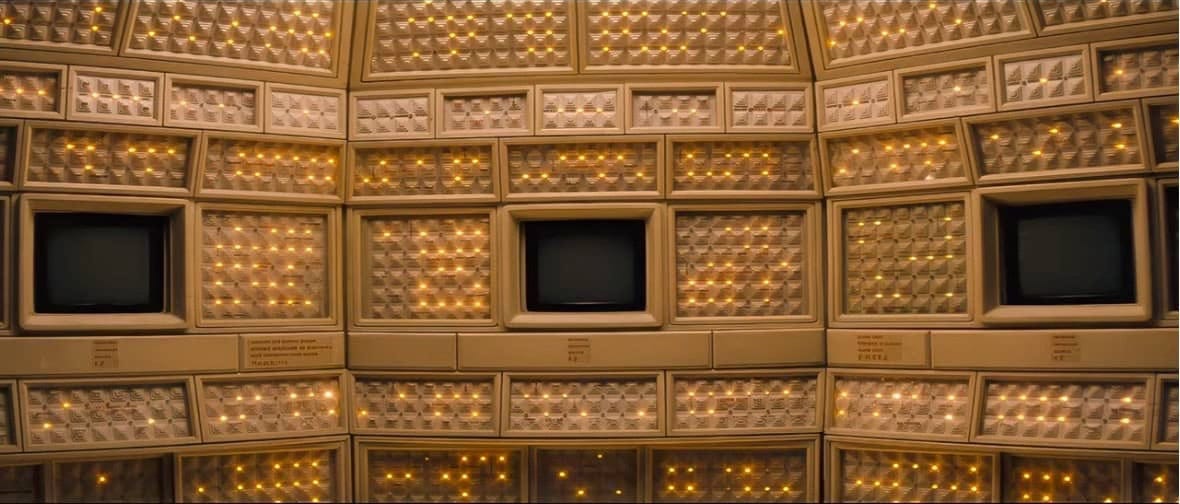
Even if you don’t want to use AI, it’s impossible not to these days. Google is flush with AI-generated results. My beloved DuckDuckGo has AI built in. Spotify has AI-generated playlists (and music). Rental car companies are using AI to scan vehicles to check for damage. In schools, teachers are spending real time grading papers students took no time using AI to write.
AI is being forced upon us from all angles. That makes it easy to see things in black and white: AI is amazing or awful. Helpful or harmful. It will destroy all jobs or it will be a damp squib. And I admit my initial reaction to AI was “it’s all bad,” particularly when it comes to creativity. In the future, will we, like the crew of the Nostromo, be expendable? No, we won’t. To me, it’s about learning how to use new tools without losing the messy process and human soul of creativity. To quote Ryan Turner, “the “A” in AI stands for artificial. The quality of the output is directly tied to the real intelligence of the input.” We get out what we put in. So, here are some thoughts on creation, tools, taste, technology, and work.
Creation.
Creativity is messy. It meanders and wanders and takes the road less traveled. Sometimes the creative act demands we simply sit and stare at the grass. Other times it asks us to fill a room with post-it notes and drawings and books. To write this, I used notecards to physically outline my ideas, rearranging them in the real world, piece by piece, while my dog stepped on them. And it’s in this mess that synchronicities happen and random sparks of inspiration appear as one idea lands next to another. New ideas grow from our precious collection of seeds and sprouts.
When I shared this piece the first time, I was trying to avoid AI as much as possible. As we’ll see in Tools, that might not be the right approach. But when it comes to creative work, however, I’m the farmer, planting my sprouts and seeds and deciding which crop is right to harvest. And sometimes, I use a bit of AI fertilizer to help a crop fully mature. Critically, though, the seeds are my own.
I can use AI as a tool to support and enhance creativity, not replace it. Collaboration, critique, and co-creation remain fully human. I work hard to stay beside the machine, not under it. To keep that focus, I wrote a few rules for myself.
Human creativity comes first. AI may augment, but never replace, my creativity. All ideas and concepts originate with me.
AI is a tool, not a decision maker. AI may assist with efficiency and idea generation, but all strategic and creative decisions remain human-led.
Always question everything AI creates. AI’s suggestions are always starting points, not final products. Treat AI as a laboratory for ideas. Always poke holes, ask questions, and evaluate output critically.
AI suggestions are raw material. Remix, rewrite, and rethink everything AI produces. The final work reflects my expertise, judgment, and vision, not AI alone.
AI is a collaborator. I am the curator. AI may contribute, but I am the curator and decision-maker. My vision guides the work at every stage.
Always respect intellectual property. Any materials uploaded to AI must be either my own creative work or IP I have permission to use and modify in course of my work.
AI does not replace collaboration with people. AI can mimic collaboration, but it cannot replace human feedback, critique, or co-creation. Human insight remains essential.
These rules keep me as the farmer squarely in the middle of creation. This process creates a conversation, a back and forth with the machine, rather than an outsourcing of creative agency. When we see AI output as the creation itself, we start to lose what makes creativity magical. And so, there are some things I choose to leave AI out of all together. Remember, we are not being forced to use AI on a creative project. That approach is slower but can be ultimately more fulfilling and soulful for the creator.
Tools.
As humans, we’ve always used whatever tools were available to us. Rocks. Spears. Charcoal. Paint. Cameras. Computers. AI is the latest tool in the stack. No technology is inherently good or bad. What matters is how it’s used.
Let’s look at the world of design. The computer was often seen as “cheating” when the Mac arrived in the mid 1980s. There was a way design was done, and this new box wasn’t it (cue Abe Simpson). Doing the craft of design the old way was definitely better. However, as computer layout became available, people began to realize that technology made design fast and fresh and allowed a designer to create many options very quickly without wasting physical resources or time. The new wasn’t so scary anymore.
Now, using AI to write or brainstorm ideas or code feels a bit like cheating. Why? Because it is cheating? Or because it’s new? Cheating is when creative work is done solely by AI and then passed off as a human creation, with no editing or review by an artist or creator. For me, the line is clear: don’t pass off AI-generated work without applying my own thinking, refinement, editing, and ultimate completion.
Our tools shape what we create. Design had new trends, styles, and techniques open up when the Mac came around. New possibilities in image making were created when the camera was invented. And now, AI is opening up possibilities we never had before. But the critical component remains the human. Creativity requires our own thinking and logic and tasteto create something great without letting the machines take the lead themselves.
Beyond the creative aspects of my work, I’m using AI to help me do things I don’t like doing (or are easily repeatable). I’ve created an “NeilOS” to help it know how I make decisions, what my core values are, and how I relate to things like work and time. I’ve created a “GraficaOS” so it understands my philosophies and goals for running my business. And from these, I’ve created tools to help me predict future capacity for client work, to help me write proposals, and to help me make sure I’m not missing anything critical from a project management standpoint. These have saved me immense amounts of physical, emotional, and mental bandwith. It truly now feels like AI is doing what it promised: freeing my time up to do other things I love.
Taste.
At the risk of sounding like a snob, many people can’t tell the difference between good and bad creative work. This has always been true. AI hasn’t changed that. The difference now is that people with bad taste (or who simply don’t care about human craft and quality) can create what they want themselves. In the past, their idea or vision would still have needed an artist to bring it to life. And that artist would have been putting their own care and craft into the finished product. There have always been different tastes in art, design, and music. But never before have so many people had the ability to simply make whatever they want themselves. People who once would have gone to an artist to create something will now use AI because, to them, AI is good enough. They don’t know the difference. And AI doesn’t either.
AI doesn’t know the difference between good and bad. It just mimics. AI is creating a blanding of art and design and creativity. Just as AirBnbs tend to look generic and bland, writing and imagery are starting to have an “AI” look as people with bad or no taste put things out into the world that offend no one but also don’t inspire anyone.
Creative professionals who care and put human soul into their work will always be in demand. I believe independent or very small teams will be the way forward. As I see the flood of mediocre, generic work flooding the world thanks to AI tools, I see an opportunity steer people in a different direction. Some people will value “fast food” creativity. There have always been and always will be people who choose “fast and cheap” over quality. But there have always been and always will be people willing to choose “great.” Those are the best clients. That’s who I work with.
Technology.
I grew up in Amish country, surrounded by idyllic fields, buggies, and barns. It can be very puzzling to people when the Amish refuse technology like cars or cell phones, yet they have barns full of high-tech CNC machines. It sure seems like some kind of hypocrisy, right? Nope. It’s all very intentional.
The Amish approach all new technology from the perspective of what it means for their way of life. Will it make their community stronger? Or will it cause cracks to form? Here’s a quote from Kevin Kelly that does a great job explaining what I mean:
“When cars first appeared at the turn of the last century, the Amish noticed that drivers would leave the community to go picnicking or sightseeing in other towns, instead of visiting family or the sick on Sundays, or patronizing local shops on Saturday. Therefore the ban on unbridled mobility was intended to make it hard to travel far and to keep energy focused in the local community.”
There are great parallels here to AI and creativity. The Amish are selective about what technology they choose to bring into their daily lives because certainly technology makes their community less human. And in our creative lives, we need to be selective about what technology we allow in because some technology makes our work less human.
Work.
Like most people, the idea of losing my job to AI has certainly crossed my mind. But understanding the difference between “tasks” and “jobs” has made me see things differently.
In 1975, the day-to-day tasks of a graphic artist were wildly different from the tasks of a designer in 2025. For one, the internet was just an idea being played with at DARPA. The job of designer to effectively communicate using hierarchy, composition, contrast, movement, proportion, and balance is the same today as it was 50 years ago. What’s different are the tasks. And that idea, that jobs are more than tasks, makes all the difference. AI depends on smart data and input to create good work. And the best way I’ve found to make sure AI has good information is find, create, and curate it myself.
Here’s how I use AI at the moment. I think of AI as a junior designer, writer, or idea parter. If I’m going to use AI, I always do upfront work to collect information, gather background, find inspiration, and create my own ideas. I still do all the work I would normally do. But then, I may use AI to challenge my assumptions. To offer metaphors or reframe an idea I may not have thought of. To save time on word structure or the phrasing of the way I want to communicate an idea. But it still needs me to shape the final creative idea. To actually decide, “is this good or bad? Quality or crap?”
That’s the human element. The strategy, judgement, and craft. Even if I use AI, it never replaces what people pay for: strategic thinking and insight, taste and creative judgment, cultural sensitivity and context, and presentation and storytelling. These are still human domains. AI can help accelerate drafts, expand thinking, or offer surprising directions. But the final decision-making, refinement, and craft still come from me.
So, will AI replace designers, writers, and artists? Yes and no. Like all of this, it’s not black and white. Our tasks will (and already have) changed. But our jobs will still be our jobs.
Elephants.
I know. I can hear you. “But what about…?” Yep. I agree. There are a lot of problems with AI. Stealing intellectually property to train LLMs. Dubious sources of data. Privacy and sensitive information being put into the machine. Using AI to plagiarize someone else’s work or style (”ChatGPT, create a logo in the style of Saul Bass”). Not to mention the huge environmental concerns. I very concerned with all of these things. But I’m not a lawyer or an IT professional or an environmental specialist. I’m an artist. So, I speak of what I’m qualified to speak of. The rest is for another conversation.
Wisdom.
As I mentioned, I’ve found some great uses for AI, from helping with brand strategy to teaching it to help me journal through tough events to running some project management systems. It works fantastically. It does feel like cheating, but in good way. I’m critical of what it produces. I always edit it and make it my own. And what it does is give me more time to think about the things I want to think about while it does a lot of the work for me on the things I don’t want to spend time on. I never want to use AI in my writing or art. But when it comes time to draft an outline based off a kickoff meeting (something I’ve done countless times), I may look to AI to help. For me, it’s the same as saying “you do this, junior designer. I’ll refine it when you’re done.”
Also, I’m having this conversation with people in and out of the creative fields. I’m getting lots of perspectives so I don’t fall into black and white thinking. And I’m resisting succumbing to the “ask ChatGPT” hole when I get stuck in my creative work. There are studies that show that the more someone uses AI, the more critical thinking and analytical skills are lost. That’s bad, and I don’t want that to happen to me.
Finally, I’m seeing what I do as moving from Knowledge work to Wisdom work. When AI has all the knowledge, perhaps what we need is a human with a bit of Wisdom. Of course, I could be totally wrong. We might all be screwed. I’ll ask ChatGPT about it.
FIELD NOTES
BEYOND THE MACHINE - Frank Chimero
Frank Chimero wrote what I think is the best piece I’ve ready about AI and creative work. It’s a bit long and a bit heady a times, but it gave me a good framework for understanding why some uses of AI feel gross and others feel natural. Are you under the machine, beside the machine, inside the machine, or beyond the machine? It’s long but well worth your time.
NOBODY’S EVER READY - Oliver Burkeman
Oliver Burkeman has long been a favorite thinker of mine, writing great books like Four Thousand Weeks and the great newsletter The Imperfectionist. This most recent edition of his newsletter puts anxiety about AI in perspective: “The reason you’re not ready for what’s coming next, in other words, is that we’re never ready for what’s coming next.” By all means, learn the tools. But don’t feel like you’ll ever be fully ready and fully prepared. “I think this is the best way to stay calm and level-headed during a moment of speculation about technological change … Even if I’m wrong about that, I think it’ll still be the way to produce the kind of work people will pay you for, because the work will come from aliveness, which is ultimately what people most want to feel and to connect with.”
THE EMBER
Give me the freedom of a tight brief.
– David Ogilvy
I often find constraints lead to better creative work. It’s certainly the case for my move to Substack. Other platforms give me the ability to spend hours fussing with the design. Here, it’s about the words and ideas. And that’s what this is about.
Cheers for now!
✌️💚
/ntw
p.s. share this with someone who might like it.